
The Hauntological in ‘Lake Mungo’
Tragic, haunting, and immersive, director Joel Anderson’s 2008 masterpiece Lake Mungo is one of the finest pieces of ghost storytelling in recent history, as well as one of the best horror movies of the decade. The film is a pseudo-documentary that follows the Palmer family whose daughter Alice (Talia Zucker) is discovered to have drowned at a family outing. Lake Mungo’sformatis used to recreate not only the tragedy engulfing the Palmers, but also to unravel the mysteries that would later surface as a result of their attempts to come to terms with their loss. This loss, in the context of the events of the film, is unique among similarly themed horror films in that it does an admirable job at literalizing Jacques Derrida’s concept of hauntology, which, in its most basic terms, can be described as the persistence of an element of the past, beyond or regardless of its actual existence, as if haunted by a ghost (Derrida 10).
The ghost in Lake Mungo, of course, is meant to be literal. Whereas Derrida’s first use of the term referred to the spectral presence of Marxism that continually haunts Western society (15), a ghost that would obsess the minds of Western leaders until—and well after—the proclaimed triumph of capitalism over communism, so too, does Alice Palmer haunt her surviving family such that they are forced to grieve not only her present absence, but her past presence, as well.
Unlike other pseudo-documentaries or mockumentaries, like Man Bites Dog (1992), Behind the Mask: The Rise of Leslie Vernon (2005), or What We Do in the Shadows (2014), Lake Mungo—from its use of unrehearsed interviews to its mixed-format structure, and especially in the unseen character of the impartial director—genuinely feels like it is a film about Alice Palmer’s death, not a movie about the documentary about Alice Palmer’s death. Instead of catching the action on film as the events unfold, or demanding a suspension of disbelief to account for catching everything on camera as in found footage films like The Blair Witch Project (1999), The Bay (2012), or As Above, So Below (2014), Lake Mungo removes itself from the story: These events have already taken place. This documentary crew is not the focus of the drama—in fact, they are entirely absent. Even the narration comes mostly by way of interviews with Alice’s parents, Russell (David Pledger) and June (Rosie Traynor), as well as her brother Mathew (Martin Sharpe) and a handful of her friends and neighbors. It’s a brilliant move that makes the film stand out even to this day.
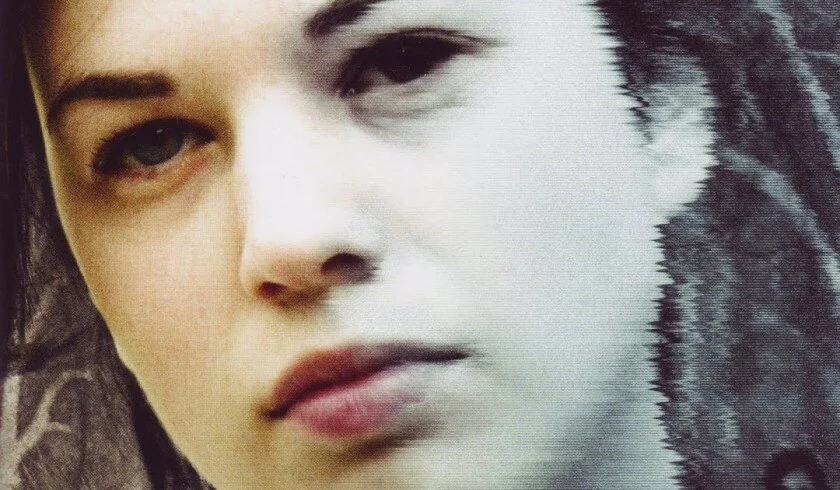
Still image of Alice Palmer, Lake Mungo (2008).
Since the film is ostensibly being assembled long after its events, rather than being shot in progress, you won’t find even a hint of a jump scare in Lake Mungo. The plot moves methodically, slowly building mystery and dread with each scene as we peel back the layers of Alice’s death. Like Laura Palmer of Twin Peaks (1990–1991), Alice’s likely inspiration, the teenager’s life in Ararat, Victoria, is steeped in intrigue. Not long after the discovery of Alice’s body, her brother, a budding photographer, begins noticing ghostly images of Alice in his photographs. The subtlety with which this is handled also contributes to the film’s feeling of authenticity. Rather than taking an approach like, say, The Omen (1976), which makes its paranormal artifacts stand out clearly in the center of the frame, the specters here are barely perceptible—shrouded in darkness, relegated to the corner of the image or camouflaged by so much digital noise that you’re left questioning your own eyes, even as the camera ever slowly pans and zooms toward the figure. The effect is truly chilling and far more effective than it has any right to be.
There’s also the way that the director uses various video formats to immerse viewers in the horror. The ghosts you see in Mathew’s camcorder footage, for instance, are restricted by its VHS-level resolution. Just as with the photographs, the frame is drawn into a small mirror or doorway, only to be thwarted from clarity by pixelated freeze-frames. Our imaginations are left carrying the load. In each case, we’re forced to lean forward, squinting at the screen, trying desperately to make out what we know to be there—what we need to be there. It reminds me of the scene in M. Night Shyamalan’s Signs (2002), as Joaquin Phoenix huddles close to the TV set, before leaping away in shock at the grainy image of the alien stepping out from the foliage. Then, of course, there’s the inclusion of Alice’s own cell phone footage. Shaky, unfocused, and riddled with video compression artifacts, Alice’s cell acts as its own unreliable narrator. We assume that we are seeing what Alice saw, and that it is sufficiently terrifying to make the rest of the film’s events fall into place. But it’s those same events, as well as the secrets that Alice was guarding, that force us to question how much faith we can have in what the video shows.
“Alice’s very existence, both before and after her death, is inextricably linked to the liminal space she occupies during the events of the film...”
All of the above makes for one of the best modern ghost stories in recent years, and that’s before you factor in the real life significance of the film’s namesake. The eponymous lake, located in New South Wales, is an ancient dry lakebed about five and a half hours north of Ararat. The site is an important one, bearing archaeological findings that support the timeline of humanity’s migration out of Africa, as well as being the earliest known location of two different ritual burial methods (Wils 123). This knowledge adds further emphasis to the film’s ontological themes—that Alice’s very existence, both before and after her death, is inextricably linked to the liminal space she occupies during the events of the film: at Lake Mungo, at the dam in Ararat, in her family home. That the lake’s own identity is tied directly to the earliest of Australia’s human habitation might be the very thing that gives Alice her revelation.

And yet, it isn’t Alice’s revelation that drives the story as much as it is the struggle of the Palmer family to come to terms with the sudden loss of one of their own (Fitzjohn 51–52). What makes Lake Mungo stand out is that its conflict lies in the constantly shifting narrative from paranormal mystery to hoax and back again. When it’s revealed that the spectral images in Mathew’s photographs and video footage have been fabricated, it feels like we, the audience, have been let down. As Mary Beth McAndrews puts it, in her essay Layers of Truth in Lake Mungo:
“While the viewer knows that Lake Mungo is a fictional film, this moment feels like a betrayal in the trust and investment into this family…Yes, the viewer knows that none of this is real, but in this moment, it feels real. But even in that betrayal, the viewer can feel his grief and understand why Mathew would make such a choice. He wanted to make his parents feel comfort in seeing Alice again. He is coping in his own way, which leads to this betrayal of trust and complication of what it means to tell a true story” (8–9).
Betrayal or not, revealing Mathew’s deception in the middle of the film breaks the pretense that we are unfolding the chilling mystery of a family haunted by their dead daughter, but rather, we’re watching an average Australian family come to terms with their daughter’s death. More importantly, the intimate nature of the documentary style folds viewers into the Palmer family, involving us in their loss and their grieving process, leaving us just as eager to believe in Mathew’s images and just as devastated to find out, particularly so early into the film, that they are fakes. But it can’t be just that, can it? In Denegation and the Undead in Lake Mungo, an essay in which Kevin Fisher, among other things, maps the film onto Baudrillard’s four stages of the sign, he writes:
“The transposition of the undead into the domain of representation thus reconstitutes it in terms of the binary between the real and the fake, where it is initially determined to be the latter...whether Alice is un-dead, or as her corpse attests merely dead, is made to stand or fall on the basis of the verity or falsity of images.”
That is to say, we are led into the assumption that Mathew’s evidence of Alice’s presence—his images—are the totality of such evidence, and by debunking them, we abandon the supernatural element of the film, turning instead to the family’s grief. “In other words,” Fisher continues, “it promotes the illusion that because the images were faked, there must be no haunting.” The effect of this development, then, triggers an entirely different shift than first assumed. Rather than hinging our belief in the film’s premise on the veracity of diegetic images, Anderson makes clever use of misdirection to turn his routine ghost story into a thoughtful hauntological exercise that explores how media and our interpretation of it affects our state of being.
“I feel like something bad is going to happen to me. I feel like something bad has happened. It hasn’t reached me yet but it’s on its way.”
The question of the existence of Alice’s ghost is unique because it is never actually seen firsthand. The first few times it is noticed is in Mathew’s photographs of the backyard, but Mathew didn’t see it in the backyard, himself. Nor did he see the shadowy figure walking across the hall, or his sister’s visage in the mirror. This makes sense, since these are the images now known to be hoaxes. June details a dream she has of Alice but, even within the confines of the dream, she cannot bring herself to look. Russell, meanwhile, recounts a paranormal experience he had while sitting in Alice’s room, but an eagle-eyed viewer might be able to discern that his memory closely follows home video footage shot by Mathew while Alice was alive. Russell’s grief-stricken memory has co-opted portions of home movies into what he likely believes to be an honest-to-God ghostly encounter. What this means, particularly regarding Russell’s encounter, is that Alice’s ghost, whether the evidence was fabricated or not, is conjured because of her family’s insistence that it exists, an assertion that falls perfectly counter to the assumption we make on learning of Mathew’s falsified images.
To understand this, we must first circle back to Alice’s confrontation at Lake Mungo. Toward the end of the film, Alice’s friends show Russell and June a video they took at their class trip to the lakebed which shows Alice, distraught and inconsolable, burying something underneath a tree. Using the video as reference, the family drives out to Lake Mungo and finds their daughter’s buried secret—a small collection of her belongings, including her cell phone. On the phone, they watch the last video their daughter took: Walking along a path, Alice sees a shadowy figure ahead of her. As she approaches, the figure slowly comes into focus before, shockingly, its face is illuminated revealing the same distended death mask we saw in the forensic photograph of Alice’s drowned corpse.
Suddenly, the narration during the opening credits takes on new meaning. Alice, in a taped interview with psychic Ray Keminy, describes the thoughts she’s been having: “I feel like something bad is going to happen to me. I feel like something bad has happened. It hasn’t reached me yet but it’s on its way” (0:00:00–0:00:28). She may not know it, but Alice has an experience at Lake Mungo that defies temporality. She witnesses an apparition of herself. Her ghost is not one borne of the past—it can’t be, because Alice is still alive. Nor is she necessarily having a premonition of her future self, though the narrative leaves this possibility open. Alice’s ghost is instead a manifestation of the Hauntological. In Ghosts of My Life, Mark Fisher divorces hauntology from the supernatural by defining it as “the agency of the virtual, with the spectre understood not as anything supernatural, but as that which acts without (physically) existing” (M. Fisher 18). But in the same breath, Fisher references Martin Hägglund’s Radical Atheism: Derrida and the Time of Life in which he divides hauntology into two directions: the no longer and the not yet:
“The first refers to that which is (in actuality is) no longer, but which remains effective as a virtuality (the traumatic ‘compulsion to repeat’, a fatal pattern). The second sense of hauntology refers to that which (in actuality) has not yet happened, but which is already effective in the virtual (an attractor, an anticipation shaping current behaviour)” (19).
Again, both Derrida and Fisher intend hauntology to be understood, not in terms of actual ghosts, but as an abstract companion to (or rival of) ontology. But in Lake Mungo, especially taking into account Hägglund’s distinction, the definition fits admirably well. The footage on Alice’s cell phone is footage that should not exist. It represents a rendezvous that can’t have happened. Alice inadvertently records “that which (in actuality) has not yet happened,” but is clearly already effective: It affects her so greatly that instead of running away and deleting the evidence, she buries her phone in the dirt in an effort to forget. And yet, it also represents “that which is (in actuality is) no longer, but which remains effective as a virtuality”—by burying her phone, Alice is burying her guilt and shame of the secrets she’s kept hidden from her family and friends. To take it one step farther, by taking place at Lake Mungo, Alice’s recording taps into 40 millennia of ghosts in an ancient place of life and of mourning.
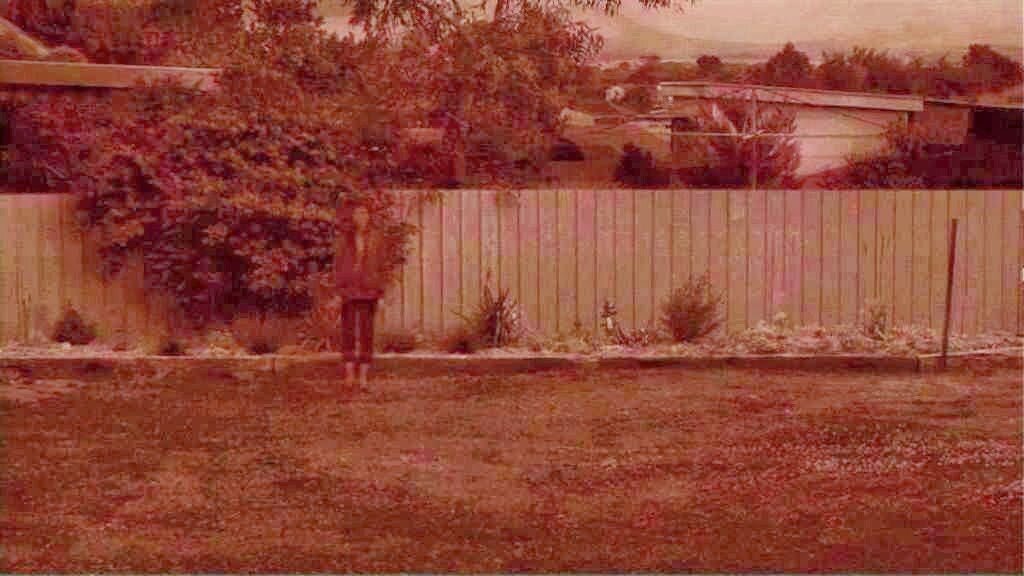
Mathew’s doctored photograph of Alice standing in the backyard.
In archived audio commentary on the Blu-ray release of the film (Second Sight, 2021), producer David Rapsey and director of photography John Brawley note that one of the things that drew Anderson to Mungo was “the idea of what kind of ghosts and what kind of inhabitants are there in a location that is as old and primal as that” (01:04:48–01:05:00). The lakebed is the site of one of the most important archaeological discoveries in Australia’s history. In the late 1960s, evidence of the earliest known instance of cremation was found, and a few years later, another grave was found, showing an entirely different ceremonial burial method. Together, these remains proved the presence of Aboriginal Australians much earlier than previously thought, making Lake Mungo a site of great importance to the three tribal groups that still live near the lake: the Paakantji, the Ngyiampaa, and the Mutthi Mutthi peoples (Doherty).
By locating Alice’s confrontation at Lake Mungo, Anderson ties her haunting to the land itself, bringing to bear the weight of countless lost cultures; cultures that, in every sense, have been buried by the eroding effects of time, but which still represent the scars of colonialism that worked to erase them and their descendant tribes. As Alice’s own past and future converge in her recording, she reenacts the burials for which the lake is famous, substituting her treasured belongings for her body, further binding her to that place.
As Alice’s secrets are slowly uncovered by her family as they mourn her death, her inciting encounter at Lake Mungo continues to assert its virtual influence over her and her family. By witnessing an apparition that at once has already happened and hasn’t yet happened, Alice set into motion a cascade of ripples that perpetuate her (virtual) presence. Mathew, in his attempt to bring consolation to his parents, fabricates evidence of his sister’s spirit. This brings them hope, at first, that Alice is still alive, and then, that some part of her must still be present. The closer they get to understanding their daughter’s life in actuality, though, the more her apparitional life comes into focus, before Ray’s session with June is intercut with those of Alice, folding time once more unto itself for the final spectral meeting between mother and daughter, and we notice for the first time, Alice’s (presumed authentic) ghostly image in dozens of overlooked images that preceded. If there’s one thing the filmmakers have taught us, however, it’s that images, whether they be photographs or video, film or digital, aren’t always what they appear to be.
Persistent DOI: https://doi.org/10.17613/q7ktx-12w65
Citation available via DOI.
-
Derrida, Jacques. Specters of Marx. Translated by Peggy Kamuf, Routledge Classics, 1994.
Doherty, Rory. The Inscrutable Mysteries of ‘Picnic at Hanging Rock’ (1975) and ‘Lake Mungo’ (2008). www.flipscreened.com/2020/09/09/the-inscrutable-mysteries-of-picnic-at-hanging-rock-1975-and-lake-mungo-2008. Accessed 1 May 2021.
Fisher, Mark. Ghosts of My Life: Writings on Depression, Hauntology and Lost Futures. Zero Books, 2014.
Fisher, Kevin. “Denegation and the Undead in ‘Lake Mungo.’” Screening the Past, Issue 43, Apr. 2018, www.screeningthepast.com/issue-43-dossier/denegation-and-the-undead-in-lake-mungo. Accessed 23 Apr. 2021.
Fitzjohn, Simon. “A Death in the Family: Lake Mungo, Parental Grief and the Horror Film.” Lake Mungo. Second Sight, 2021, pp. 51–57.
McAndrews, Mary Beth. “Layers of Truth in Lake Mungo.” Lake Mungo. Second Sight, 2021, pp. 5–11.
Rapsey, David and John Brawley, audio commentators. Lake Mungo. Second Sight Films, 2021.
Wils, Tyson. “Conjuring the Real: Ghosts, Technology and Landscape in ‘Lake Mungo.’” Screen Education, no. 82, Australian Teachers of Media (ATOM), 2016, pp. 120–127.
Article written by Ande Thomas
Ande loves the intersection of sci-fi and horror, where our understanding of the natural world clashes with our fear of the new and unknown. He writes about monsters and foreign horror and can also be found over on Letterboxd.

Other articles you may enjoy...
![[Book Review] ‘The House of Silence; Ghost Stories, 1887–1920’](https://images.squarespace-cdn.com/content/v1/5d3e481bc5a6e40001b215a8/f7984d21-7a65-4f97-a0a2-8e9d66d2d79c/house+of+silence.jpg)
Bones and roots adorn the walls of their dimly lit home. A mjölnir necklace hangs around K.’s neck as he hand carves incense into a small cauldron burner and a breathy soundtrack begins to play. This is a couple that is in tune—with themselves, with the natural world, and, as we will soon see, the supernatural world, as well.