
An Interview with Adrian Țofei, Director of ‘Be My Cat: A Film for Anne’
In 2015, a young Romanian filmmaker quietly released a found footage film that, over the ten years since its release, has amassed an incredible cult following. Be My Cat: A Film for Anne follows a director who is willing to go to any lengths to get the attention of Anne Hathaway, with the hope that she will come to Romania to star in his film. The logline alone is creepy enough, but this is a film that needs to be seen to be believed. To celebrate its 10-year anniversary, I sat down with the director and star of Be My Cat, Adrian Țofei, to talk about his approach to filmmaking, what makes found footage work, and misconceptions people sometimes have about the genre.
This is part one of our discussion. Part two can be found here.

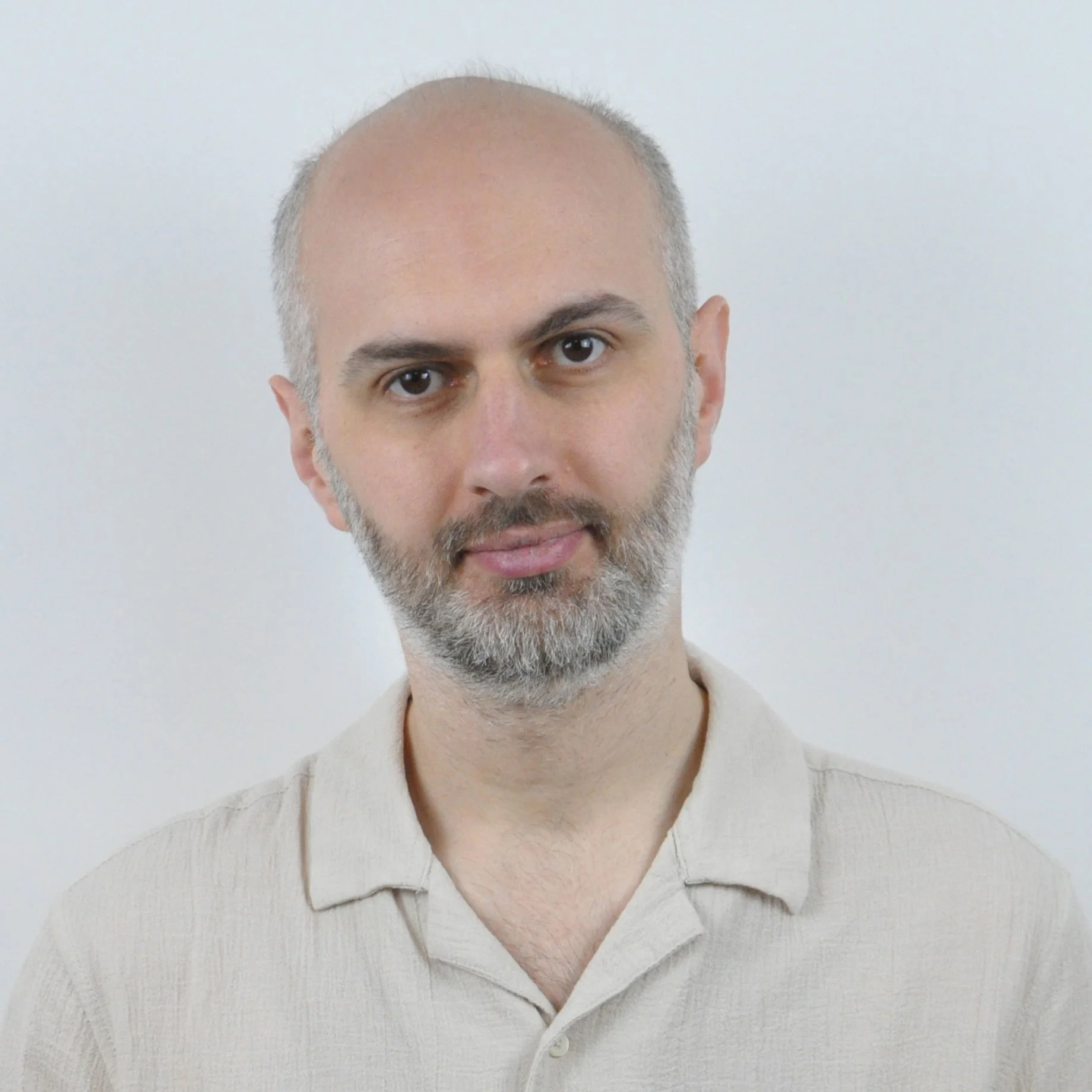
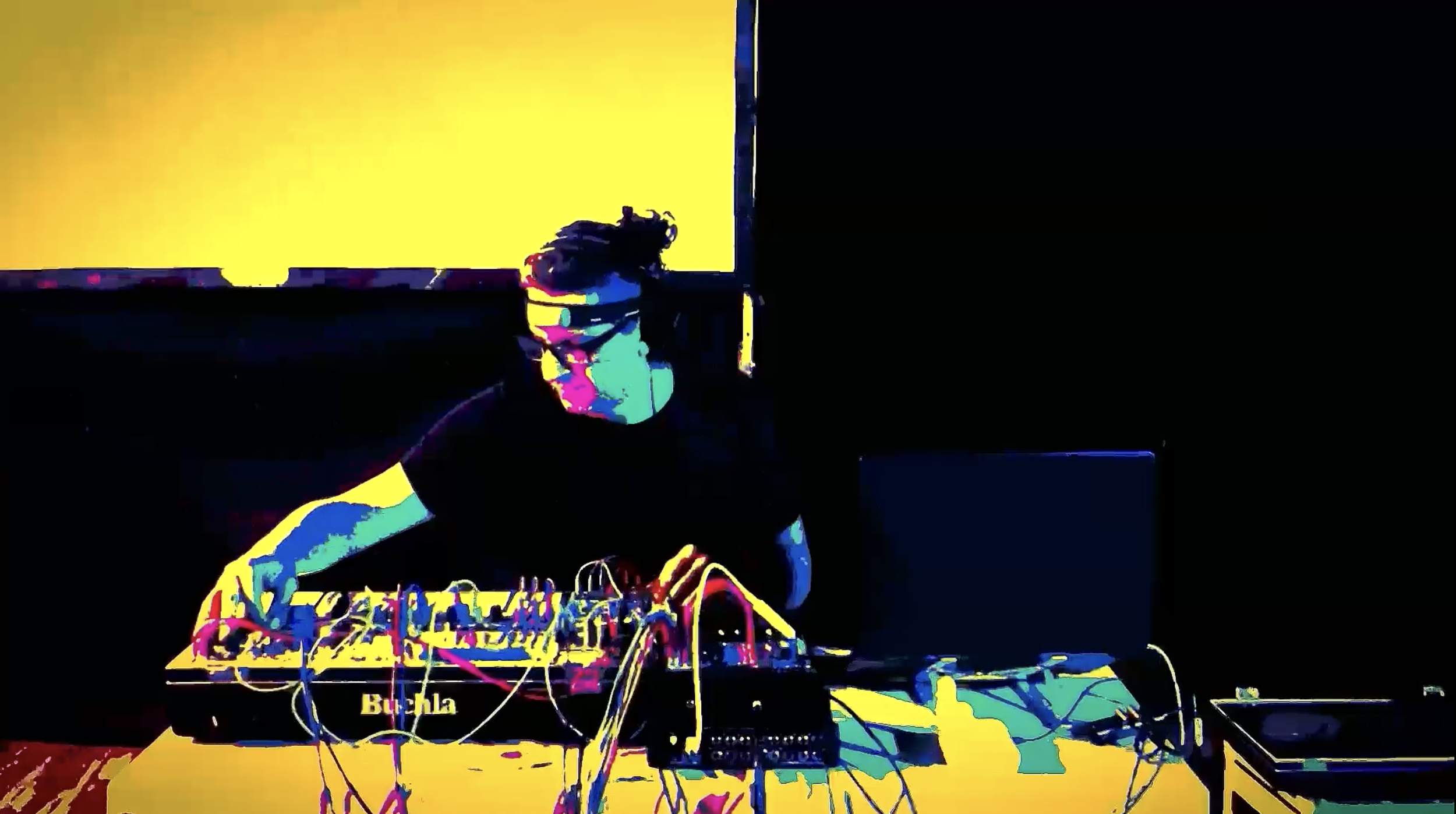
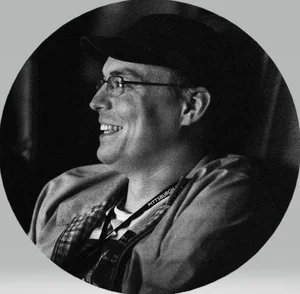
Adrian Țofei, image via adriantofei.com.
What Sleeps Beneath: I think I came to know your film Be My Cat maybe five years ago or so. I was going through a big found footage kick which, honestly, I still haven’t come out of, and I came across your film—and I'm sure you get this a lot—was completely blown away. Then the more I thought about it and read about it and heard you speaking in interviews, it seems like your philosophy on found footage is a lot more robust than many people who make them, or even watch them. So I just want to talk about the way that you method act, the way that you get into character, and your philosophy on how to create the world that you are filming.
Adrian Țofei: Yeah, wow, that’s a very big discussion (laughs). Where do you want me to start from? Let’s speak piece by piece.
WSB: Sure! I know a little bit about your background in acting in theater, specifically with your one-man show that you wrote and that sort of inspired Be My Cat to an extent, so how did that background help develop your character and your understanding of film and of found footage, in particular?
Adrian: In college and in my masters we were doing theater, yeah. But the method was kind of opposed to theater, you know, because theater was seen as something undesirable, like this idea of being theatrical, like being fake, you know, of not looking real. So we were trying to make our theater shows look as pure as possible, as just pure moments of life. We were trying to achieve that type of realism that if, I don't know, if somebody would walk in on one of our rehearsals, they wouldn't know if it was a real show or if it's just some people having an argument for real. We were looking for that type of realism with everything—not just the acting but the environment, the stage, everything, so yeah that definitely had a huge impact in what I'm doing with found footage.
The same way that our teacher had the goal of making shows that don't look like theatrical shows, trying to remove practically every element whatsoever that would remind audiences that it's just a show, you know, and try to put actors in certain... How should I say this? The goal was for the actors to go through a genuine process during their performance, just like people go through in real life. So that together with the removal of elements that remind people that it's a show, the goal was for the audiences to really connect with what they are seeing and hearing, to maximize immersion.
Press play on your personal media and support What Sleeps Beneath at the same time. Try Plex Pass Now!
And of course later when I made the transition to film, I wanted to apply all this knowledge and all this experience from this unique method that was developed—by the way—by a Romanian teacher (Ion Cojar), specifically the technicality and the philosophy actually, because he was actually against “techniques,” because he said in real life we never apply certain techniques to how we move, to how we talk. So everything happens naturally, all the transformations. And you can see that (by the way I'm making a short parenthesis here), you can see that in the way I did Be My Cat because everything that the character is doing is with the goal of convincing Anne to come to Romania. So the entire plot is being brought forth by his constant attempt to convince Anne Hathaway. So the movie is kind of created, the movie is being birthed by his attempts to convince her to come.
So anyway, back to what I was saying. So when I decided that I wanted to bring all this knowledge and experience that I had from this acting method into film, I had this understanding like, oh my God, what this guy was trying to do in Romania, these guys did in the U.S. with The Blair Witch Project. Only that they didn't do it in theater, they did it in film. They tried to make this film that doesn't look like a film. They tried to remove every element whatsoever that would remind people that it's a film. And when I had this revelation and understanding, all of a sudden I could see this incredible potential behind the found footage concept in terms of the realism and the sense of immersion that it could give audiences.
WSB: Yeah, the thing I like about found footage is that on one level, it serves a practical purpose, right? Like it kind of strips filmmaking from the complications and the bureaucracy that you might get from a studio or that bigger budgets, in general, entail. And it just focuses entirely on the art of film, of acting, of writing, of editing. But then on another level, like you were saying, it sort of plays a game with its viewers. It's asking them (many times, literally), to truly believe in its veracity. Like in your film, for instance, it opens with a title card that says that what we are about to see was edited down from 25 hours of footage found at a crime scene. The Blair Witch Project does something similar. Cannibal Holocaust did it, as well, and so on. So it's asking viewers to literally believe what they're seeing on screen. And I think your film falls in that notorious category of films like The Blair Witch Project, like Ghostwatch, like Faces of Death and Cannibal Holocaust, where it almost succeeds too well, where people really do believe that this footage is real. And sometimes that causes the filmmakers, such as yourself, some issues, whether it be as serious as trouble with authorities or as benign as online comments or things of that nature. So putting Be My Cat into that category, do you see that as one of its successes? Or do you think it ends up almost being more trouble than it was worth, where now you have people accusing you of being this psychopathic character?
Adrian: No, no way. I think that's been blown a bit out of proportion because at some point, yes, some people, like a very few people, only I think one or two or three people at most who actually put abusive comments, you know, out of the thousands who were appreciative. But those two or three comments, they disturbed me and I did make the mistake of reading those comments and I chose to respond to them, and of course, those posts blew up and now some people have the feeling that this is constantly happening to me. No, it's not. Thank God. It's not that level. You know, I was never taken to the courts, you know, like the guys who did Cannibal Holocaust, where they had to bring the actors literally to court to prove that they were not dead.
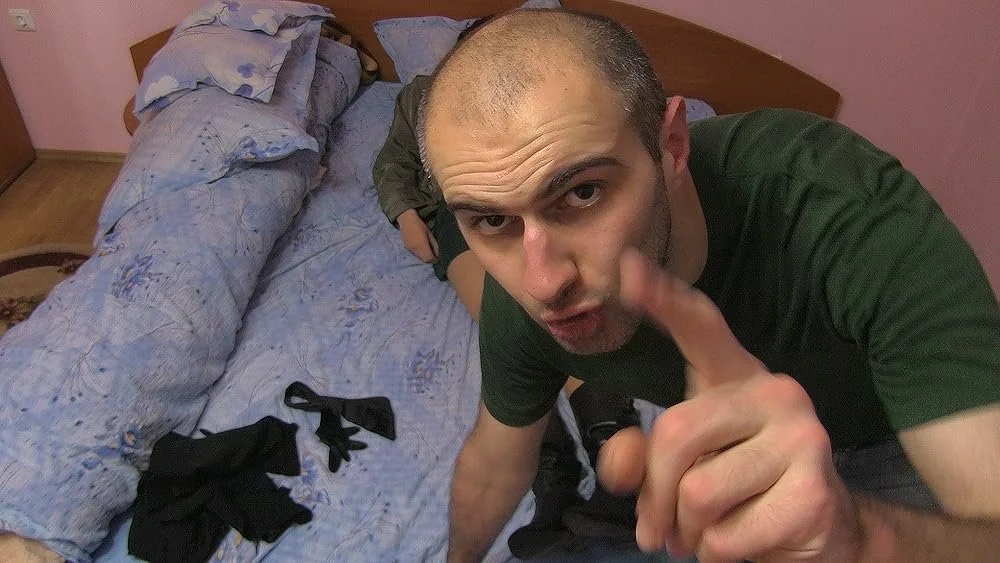
Still image from Be My Cat: A Film for Anne (2015).
But also, here's another thing. I was also careful to not go in that direction. When I did Be My Cat, I initially had the idea to do this type of viral marketing, kind of what they did with Blair Witch, where I’d make a fake account as the character, to make fake social media accounts or to start leaking certain footage from the film as if it were real. But then I said no, I can't do this for two reasons. One reason is because I'm thinking I don't want to be a prankster, I want to be perceived as a filmmaker, you know. Not as somebody who pulls a prank, you know. I don't know. There are some examples of videos that have been made with the explicit intention to trick people, you know, not to make a film. And in my opinion, that's a pity because those are wonderful examples of found footage filmmaking, but nobody views them as such because they were not meant with that intention and I didn't want to be associated with that. And I believe there is more value when people watch something and they know it's not real. They know they're watching a movie or they begin watching it thinking it's a movie, but then due to how real it feels, they begin questioning, you know? I think it's more powerful this way. They begin questioning and then they read and they investigate. Rather than tricking them into thinking that this is a documentary and then at the end they learn it's not and they're like, "Ah," and then they get angry and then there's a backlash, actually. The same thing happened with Blair Witch. There was a huge backlash from some people who genuinely thought they're going to watch a documentary. And there's also a little bit of a moral issue, in my opinion, to make somebody watch something thinking it's a documentary and it's not. It's very murky waters. I didn't want to go in that direction. So that's one of the reasons why I didn't go with that marketing.
The second reason is that I was genuinely concerned. I was like okay so I am a Romanian guy you know I'm not part of, let's say, the film industry in the U.S. because I was planning to submit the movie especially to genre festivals in the U.S. and stuff like that. I know that the horror genre is probably a bit more popular there than it is in Europe. Although now things are balancing out a bit, but I was planning to do that and I was concerned that people, not knowing anything about me, and seeing this submission from some guy on the internet, that they might be concerned and then not select the movie and not treat it like a professional production, just because they might suspect that this guy might have some mental problems, you know? So I was afraid. I was careful. I took precautions. I wanted to do it as real as possible. But at the same time, I wanted people to know that this is a movie.
WSB: I think one of the reasons why it works so well in Be My Cat versus other found footage films that might not succeed to that extent is that it layers narrative on top of narrative. In real life you are a director playing a director in your film who is a psychopath that is playing a psychopath. In other words, the character “Adrian” hides his stalker behavior towards Anne Hathaway behind the stalker character that he's playing in his film, which he’s making to show to Anne, so there's that extra layer of dissociation that sort of lets audiences question their own rationality, right? Like when you start watching the film, you say, okay, I'm watching this film about a character who's obsessed with Anne Hathaway. And then you see it and it throws this other layer where this director is directing a movie about a stalker in order to attract her attention. And now you're thinking, wait, am I watching the film I thought I was watching, or am I watching the film that this character actually made?
Adrian: Yeah, and ultimately, I think that also makes even the ones who are perfectly aware that this is just a movie think, “oh, what if this layer extends even more?” What if I, the director, am a little bit like that, you know, what if there is some truth to this, you know, because I remember when I watched The Blair Witch Project, I already knew it was a movie. First of all, it came to Romania later, I didn't see it in the theaters, I saw it later when it came on TV. So I knew perfectly that it was a movie and all that. But while watching, you know, I still remember thinking that these guys who claim to be filmmakers, were actually student filmmakers. So I was thinking that some elements must be real. Otherwise, it couldn't look so real. So I'm guessing the same thing is happening with Be My Cat. The people who are a little bit suspicious of me, it's not like they think that I murdered people. But it's because of this meta thing, they are starting to think, what if there is some truth to it? A piece of it, at least. And it's not. None of it is real. It's all fiction. And it’s only after they friend me on social media, or watch interviews with me, after they see how I behave naturally in real life, only then do they realize, oh okay, so there's nothing crazy here, good!
WSB: Apart from that narrative aspect, another thing, and I watch a lot of found footage films, I watch a lot of indie films, B-movie horror, and one of the things that consistently takes me out of the immersion is the sense I get that a lot of people think it's much easier to ad-lib and to improvise dialogue than it actually is. A lot of times you’ll see, if the characters get in a stressful situation, for instance, they find a default line or phrase that they'll end up repeating over and over—maybe it's a narrative beat that they have to hit or something and they want to make sure they hit it. But it doesn't sound the way that two people talking in real life sounds like. In Be My Cat, you don’t have that issue. And I wonder if that's because you have more experience in your improvisation or if you just shot so much footage that, you know, eventually you were able to find the right material. How much did that play into how you were shooting and how you edited your shots?
Adrian: No, it's a lot of, it's tons of preparation. I mean, after The Blair Witch Project, I've read all these stories that there were tons of kids, you know, who just went into the woods thinking they will shoot the next hit, you know? Like, oh, look how easy it is! And then they find that it's not that easy. It's extremely hard because you can’t just go and improvise everything. I mean, you are a character in a certain life situation with a certain life history.
For example, you are here, you are real right now. I believe you. I believe in the character that you are, you know? You are Ande Thomas. But do you know how much work went into this character? How many years of experience to become this character you play? You see how much work went into that? How much preparation went into this role? It’s the same thing with improvisational acting. It's not like you just go, “Let's start improvising the characters.” No. You need to have, if not a month, at least some weeks. In the case of Be My Cat, I did it for a year. I would not suggest people do it for a year because I think it can be a bit dangerous, especially if you are not a professional actor and if you don't have experience getting rid of the role afterwards, because it can be literally psychologically dangerous because then you risk if you live for a period long enough being somebody else, even partially, this will start affecting your actual psychology. So unless you have experience with how to play with this stuff, it can be dangerous. I wouldn't suggest doing it for a year the way I did, but I would suggest at least for a month. A month is not dangerous. I mean, live in character for a month, try to do some of the stuff that the character does, not the illegal stuff, not anything that... I'm not saying do something immoral or illegal, but do things that are still within the boundaries of socially acceptable things that the character does.
Just to give you an example from We Put the World to Sleep: So these characters have these apocalyptic thoughts, you know? So, of course, while working on my character, in order to get into that apocalyptic mode, of course, I wouldn't just go and try to end the world or try to do anything to harm anybody, but let's say whenever I had some spare time, I wanted to play a game, I would choose an apocalyptic game instead of something else that maybe I would want to play. So in my daily choices, I would choose things, as much as possible, that would be more in line with my character, rather than myself. So this is what I call partially living in character because from time to time I've been asked and I even wrote online that this whole yearlong period for Be My Cat I lived partially on and off in character and for We Put the World to Sleep as well, though in that case, I pushed it way too far. It was nine years. That's something that I certainly do not suggest anybody do, not even the professionals. That's something I kind of regretted because it took me probably a year to totally wash off any traces of that character after I finished shooting.
But okay, I'm talking now about the dangers. But the thing is that what you were talking about, why so many films don't look real, and especially found footage films, it's like this thing which yes, if it's pushed too much, it becomes dangerous. But if you don't do it at all, it's nothing. You don't have realism. You've got to do it. You've got to live a bit in character, at least partially. Go on location, live in that room where you're going to shoot the film, in that home, in those woods. Do some of the activities, not necessarily the activity that you are going to do in the movie, because if you do that, it's like you're already playing the film. And then later when you shoot it, it's no longer fresh. It doesn't look genuine because you already rehearsed it before. So you have to repeat it. Do some of the things that your character has done in his past. Yeah, we did all these things for nine years on We Put the World to Sleep, you know, on and off character and crazy stuff. So, yeah, do a bit of that, you know, the history of your character. What did he do? What were his thoughts? What were his interactions? What were his obsessions? What were his daily habits?
WSB: How far do you go into that? Do you think about what his childhood was like or how he grew up, where he grew up, the sorts of things that he was interested in?
Adrian: Yeah, I mean, I don't invent things from scratch because they feel too distant from me. But this can also depend on the actor. For me personally, I choose to, let's say your character is in a weird way, okay, in Be My Cat, for example. Instead of inventing a history that is far away from me, I'm trying to maybe find little aspects from my real life, you know, or from my history or from my thoughts. Little things that can be altered or modified in my mind emotionally to resemble more what his history might be and what his life experiences would have been.
Something like, I don't know, like maybe one time when I was a child I was rejected by a girl and of course I felt upset. And then you think, okay, what stopped me from then becoming this murderous psychopath who gets frustrated by this rejection and decides to kill that girl or kill women or something like that? What stopped me? Well, maybe it was my education. Maybe it was my relationship with my mother. Maybe it was my school. Maybe society. You start to put things together. What are the things that stopped you in real life from going on the path your character went on? And then when you are building the character, maybe you are trying to pull those things aside, one at a time, to block the stuff that stopped you from going on that negative path. You know, okay, if my mother didn’t teach me how to behave, what if I had something different than that? Then, okay, there wouldn't have been anything to stop me from going on a destructive path, you know, or maybe there was some abuse or something else. You try to trick your mind into thinking what would be the situations in my life that would have put me on a path to become this guy. But you start from little things. You start from real triggers. You don't start from something totally fake. But that's my personal choice. I find it much harder to start from nothing and to totally make it up. There are certainly actors who can do that as well. That's not my thing.
That's a reason, for example, why I chose Anne Hathaway. There is no obsession whatsoever towards her or even Catwoman. Do you know what I liked? I liked her performance in Les Miserables. That has nothing to do with horror or with anything cat-like. So I loved her performance there. And that's one of the reasons why I chose her, because she already had the cat connection from The Dark Knight Rises. But I also wanted it to be an actress that I also genuinely appreciate. I didn't want to build this character’s obsession from nothing. So because I had this genuine appreciation for her performance in Les Miserables, I tried to put this dark, ugly magnifying glass on that genuine appreciation and transform it into an obsession for my role. So that's kind of my method. It takes a ton of work in advance. And that's the frustrating thing, I believe, for found footage filmmakers who do it right. It can be frustrating when there are people coming and saying, "Oh, what is this? I can take my phone and shoot it right now." And I understand this! I even answered at some point, please do! Like, genuinely, take your phone and do it! I mean, he would learn that it's not that easy and he would be working on that phone for a year or two but afterwards, he would have his movie and then he would understand.
WSB: I think that in filmmaking, editing is often the most underrated and overlooked part of the process.
Adrian: So good you're bringing this up. Yeah, because it's a continuation of what we were talking about.
WSB: Right! So especially in found footage because there is that sense of being a documentary-style and in documentary filmmaking, the edit is how the directors tell their story, right? Like they can shoot as much information and footage as possible. They can have interviews, they can do on-screen or on-location shooting. But the way they splice those scenes together and where they put the cuts, what gets included or excluded, that's how they craft their narrative. And I think in found footage, that's often overlooked and the way that you shot Be My Cat where you took your 25 hours of footage and put it together, how aware were you of that documentary-style narrative?
Adrian: Extremely. Yeah, extremely aware because like we were just talking about, you know, how essential is living in character and preparation, the idea is for you to become the character so that when you open your mouth, your words and actions will be those of the character. Practically, you are trying to create this parallel fictional universe that lives and breathes by itself. It's a self-sustained fictional reality. And then you just add a camera to that reality and you record what's happening there. This is exactly what documentarians do. They go into an area where there is a war zone or a social situation or anything like that and just record interviews, record what's happening. They get tons and tons of hours of footage. And at the end, they look at all of it and say, “Okay, how can I put this in? How can I cut this down to two hours so that it makes sense to people?” Same thing. So after this enormous amount of preparation, it's not enough. Because even with that, with this type of work, you’ll have all of this talking, all of these repetitions. You will still have lots of boring moments. Why? Not because the movie is not well directed or prepared. It is prepared. But even in real life, there are tons of boring moments. Thank God we are not always in a conflict with aliens invading and deciding our life and death situations. Thank God there are moments when we are just bored and sitting on the couch. Nothing happens. So obviously that's not an issue. But then you gotta have this documentarian talent and enormous patience to cut out those parts, you know? Because you end up working exactly like a documentarian when you do a found footage film in this way. When you do an improvised found footage film with all of these hours of footage, then you get all this life that has happened between these characters, but you have to cut it down.
So yeah, you are so right about this. And this is actually the part that I do not like, editing. I don't like editing. I find it so stressful and it's so long but it's so crucial. I don't like it. I find it too stressful. Little bits and pieces. I mean, imagine for Be My Cat, I started with 25 hours. For We Put the Word to Sleep, I started with 100 and something hours. And not having a very clear script, a very clear story, there are different ways in which you can arrange what has happened to create completely different movies. I mean, in the case of We Put the World to Sleep, If 1,000 people got that footage, those 100 hours of footage, they would have made 1,000 different movies. Totally different. So you have tons of ramifications where you can go with this thing. Then you make a first arrangement: “No, I don't like this. Let's put that thing there.” Yeah, but if you put that thing there, that changes everything. And you put the other one there. You know, it's like constantly playing with puzzle pieces for months. And in the case of We Put the World to Sleep, for years, till finally I found the right arrangement that makes sense in a way that you want it to make sense as an artist, you know, because it's still a work of art ultimately, you know. So yeah, it's crucial, like editing is crucial as well, not just the preparation before.
WSB: I'm honestly a little bit surprised to hear that the editing process stresses you out so much, just because in Be My Cat, at least, it's impeccable. There's a number of different scenes where Adrian (the character) says something or he kind of has a revelation, to himself or to the audience, and the cut happens either immediately after or it takes a beat and you kind of linger on his face for a second or two before the cut and those sorts of things are so emotionally captivating, something that you see in much bigger budget films, not necessarily with someone who's self-taught in the editing studio.
Adrian: Yeah. I worked so much on, not just what to put in, also how long to keep every shot. For example, what you said right now: How long to keep his reaction after he finishes his line. There are moments when I kept it only 10 frames, you know, there are moments I kept it only five. But can you believe that there are moments when I put 10 frames in and then I'm playing it back to see, does it work? And I'm watching it again and again and again. Let's make it 11 frames. Let's watch again. And again. For a single cut, sometimes I worked an entire day, hours and hours watching the same little cut, just feeling what is the difference when you add or subtract a frame, two frames, something that most people wouldn't even notice. But I got so obsessed with perfection in certain cuts. Not all of them, that's true. But a lot of them. Because there's a certain feel to it. But then once you keep it longer, then you need to go to the other frames as well, to the other cuts as well that are next to it. and keep those a bit longer as well, because then the rhythm is different. If one is a bit too long then the next, and so on, oh my God, it's madness, this type of energy.
WSB: Yeah, I mean it’s like this frame, this 1/24th of a second that most people wouldn't even think about, they might just say, “Oh, put the marker there and call it a day,” but it matters. Think of subliminal messaging where they insert a single frame into a picture. It's almost imperceptible. Almost. You still see that flash. You still see a little bit of something. It still registers in your brain. Or in older films where they had actual reels and they would add cue marks to signal the reel change, so you have those cases where even this one single frame is noticeable. And there's no reason to think that the same wouldn't happen at the end of a scene or at the end of a long pause when you're just staring at the character and that 1/24th of a second takes it from funny to kind of concerning, you know? There's that emotional play that you're going with the audience. So that's incredible that you do that by instinct so thank you for taking that stress onto yourself for the sake of your film!
Adrian: Yeah. And I did the same with We Put The World To Sleep. Although in We Put The World To Sleep, I think it's much faster paced, you know, because we had much more footage. And I had to sacrifice those emotional moments when you see the reactions of the character. I literally had to sacrifice them. There was no space for them. So it works in a different key, the movie. It moves forward, forward, forward. And I'm curious if people will be able to connect emotionally with it. We shall see. Hopefully. Hopefully they will still.
WSB: Well, if your past effort is any indication, there's nothing to worry about.
Adrian: Thank you so much.
In the next part, Adrian and I will talk more about his long-awaited sequel to Be My Cat: A Film for Anne, We Put the World to Sleep, which is currently being submitted to film festivals, as well as Pure, the planned third film in the trilogy. We also talk more about living in character and advice he has for aspiring filmmakers.
Article by Ande Thomas
Ande loves the intersection of sci-fi and horror, where our understanding of the natural world clashes with our fear of the new and unknown. He is an independent member of the Society for Cinema and Media Studies and a supporting member of the Horror Writers Association. He writes about monsters and foreign horror and can also be found over on Letterboxd.
Other Articles You May Enjoy…

Filmmaker Bari Kang discusses Itch!, from its practical gore and zombie influences to filming in his own NYC store and directing his daughter.